
Mapping Logan People Directories
Logan people directories are most reliable when each listing is read for the role it was built to show. Government pages identify offices and public contacts. Campus and school tools identify institutional ties. County land systems identify owners and recorded parties, while professional and business portals identify a license or filing role. Older city directories, phone books, yearbooks, cemetery records, and newspapers preserve earlier residents.
| Logan directory | People or roles shown | Maintained by | How to consult it |
|---|---|---|---|
| Departments Phone Directory | City departments and public office contacts | Logan City | Free filtered table |
| USU Directory | Published faculty, staff, and departments | Utah State University | Free web search |
| School District Directory | District and school personnel | Cache County School District | Free web search |
| CORE owner roll | Owners, businesses, and trusts on the tax roll | Cache County | Public search capped daily |
| License and business indexes | Licensees, agents, and filing principals | State of Utah | Free basic searches |
| Historic city and reverse directories | Past residents, occupations, and addresses | Logan Library and USU | Catalog or staff-assisted research |
Start with the directory tied to the known role. A public employee belongs in an agency route; a professor belongs in the campus search; a parcel owner belongs in CORE. A person who lived in Logan decades ago may be easier to place through a dated directory or yearbook than through any current online list. Every result needs a date because a former title, address, or ownership entry may remain visible after circumstances change.
Logan Government Contact Directories
The Logan Departments Phone Directory is a filterable table of department names and telephone numbers. It covers offices such as Administration, Community Development, Finance, Fire, Legal, Parks and Recreation, Police, and Public Works. It is not a named resident list, or even a full employee index. Individual department pages may add a named official, title, office address, or direct line.
The captured Logan City department directory shows how the city organizes access by office rather than by a person's surname.
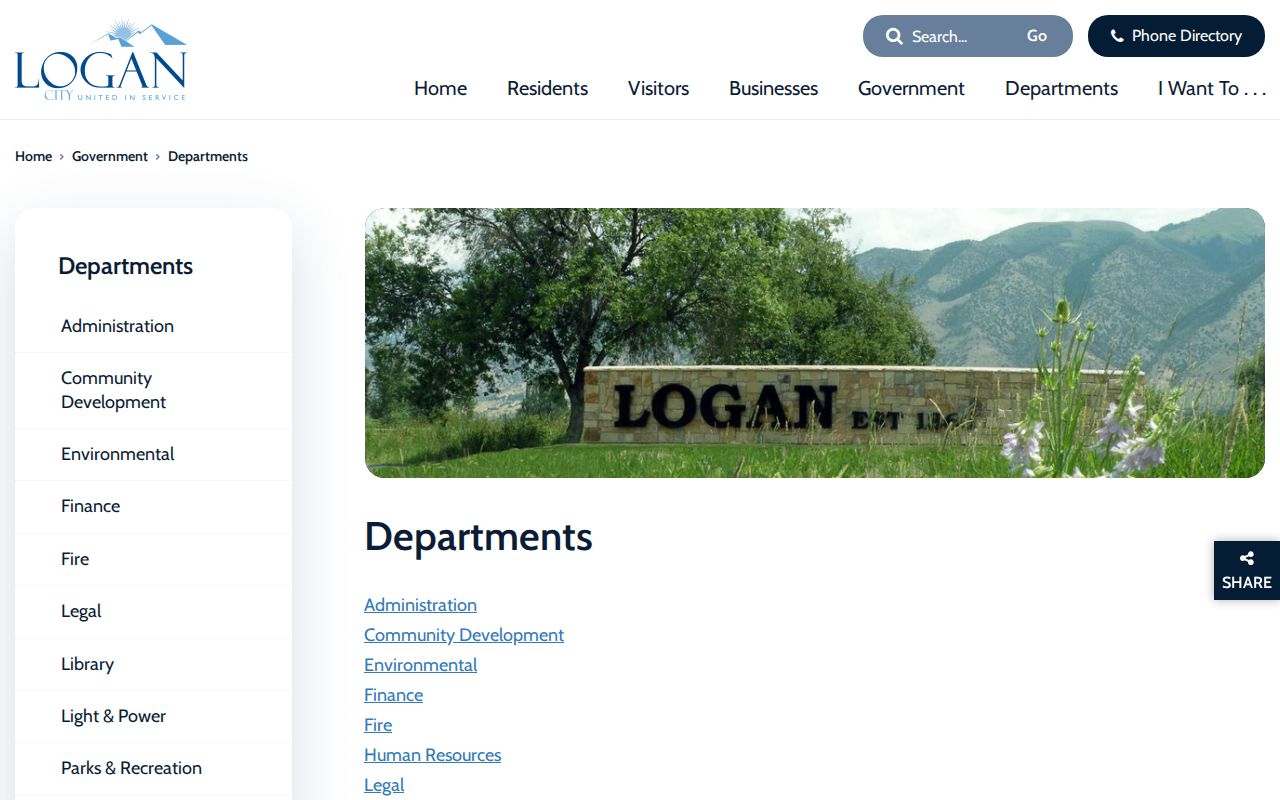
Use the department and role from that directory when checking council packets or asking the City Recorder for a known record. Cache County's department and elected-official pages extend the search to county government, while Utah's agency contact directory supplies the statewide route.
The Utah government contact directory provides another official path when the relevant office is a state agency.
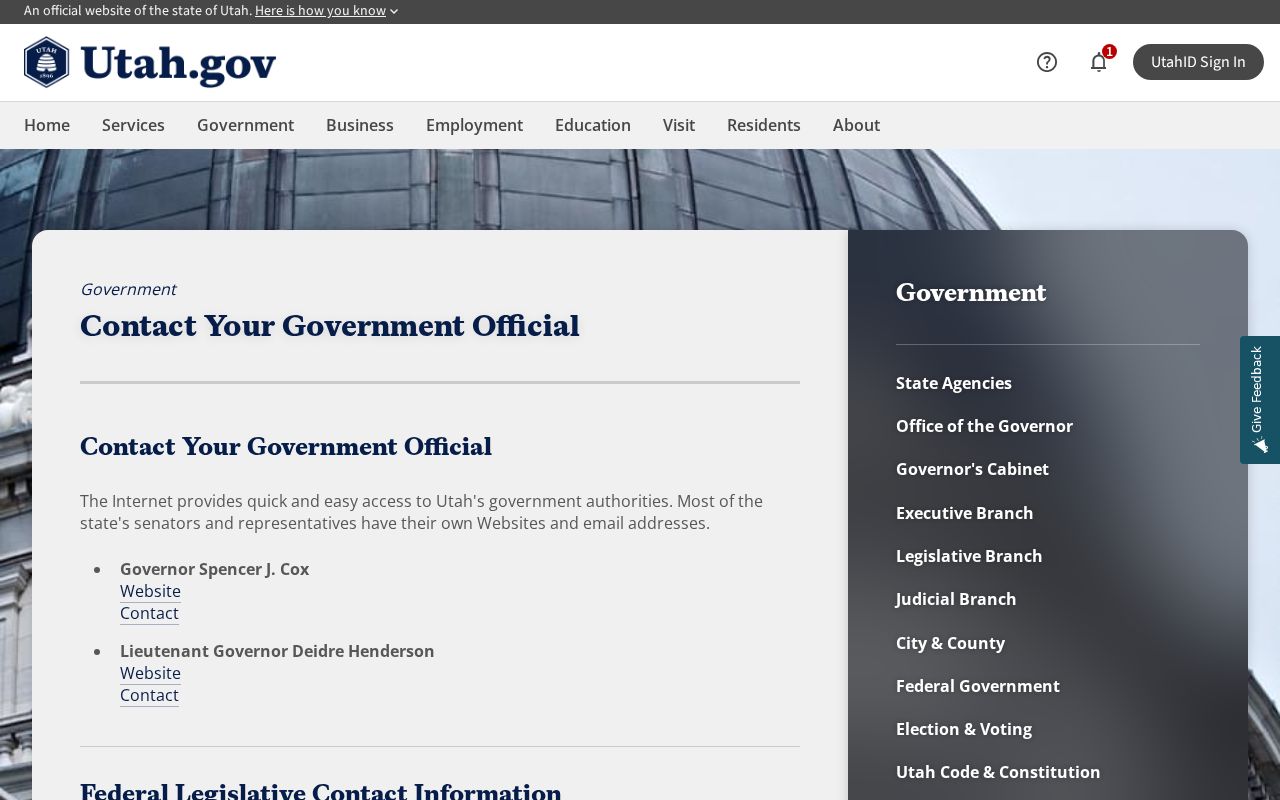
This broader directory is useful for routing, but an agency contact is not proof that a named person holds a specific post. Confirm that detail on the agency's own current page.
Note: When no employee index exists, call the listed department and ask for the role, not private contact information.
Logan University Directory Search
Utah State University gives Logan an unusually large institutional directory. The USU people directory searches employees or departments and separates person results from unit results. A public profile may establish a preferred or display name, title, department, and campus location. Work telephone and email controls can require reCAPTCHA, so the listing should not be treated as a tool for bypassing contact safeguards.
The live USU directory presents a compact search surface suited to either a person or an organizational unit.
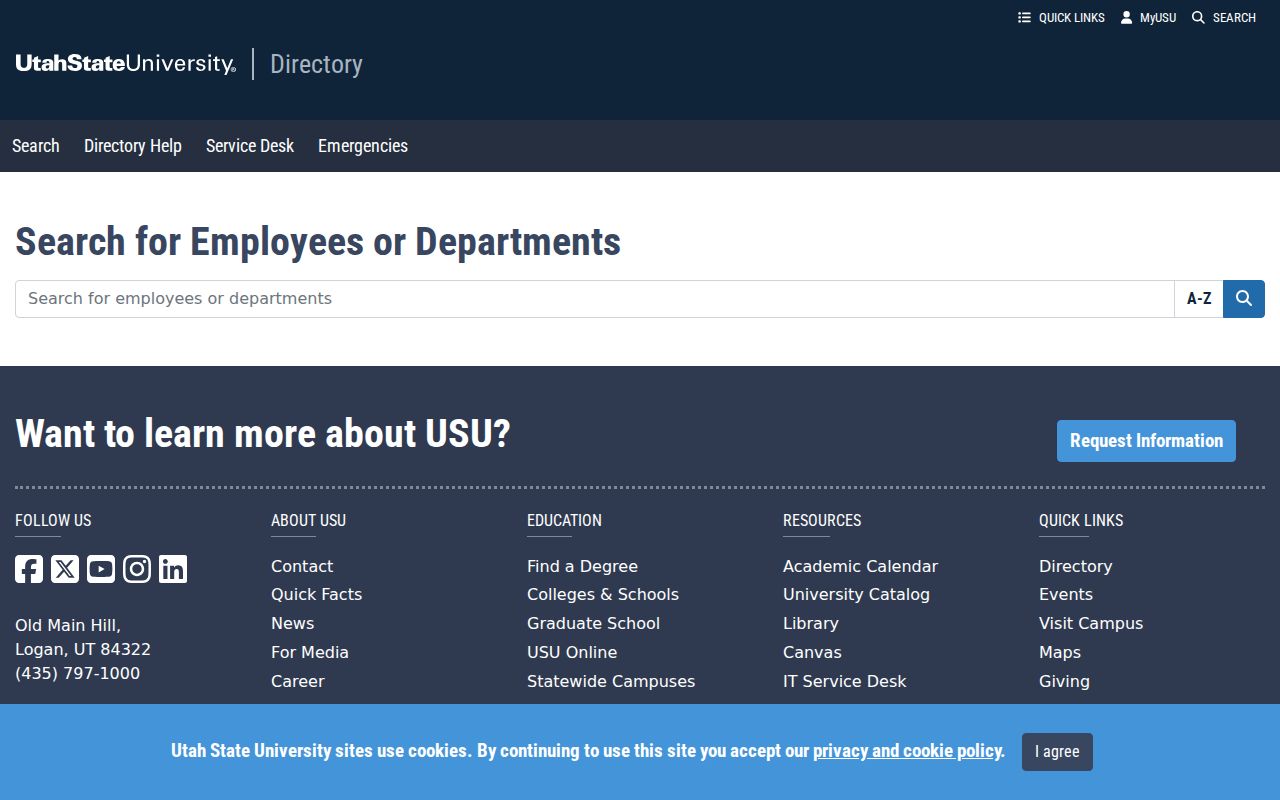
A role and department can be enough to distinguish people with similar names. The unit's public main contact then provides the proper path without exposing personal data.
| USU search control | Input type | Needed? | Useful format |
|---|---|---|---|
| Search for employees or departments | Text | Required | Given name, surname, full name, or unit |
| Magnifier control | Submit button | Yes | Returns separate person and department matches |
Insider tip: establish the person's role and unit first. If direct contact details stay protected, use the department's published main route. That is often enough to reconnect with a faculty contact or verify the institutional identity behind an older publication.
Cache School Staff Directory
The Cache County School District directory offered Keyword, First Name, and Last Name fields when inspected. It reported 4,225 entries on August 1, 2026 and displayed 12 cards per page. A card can show a full name, photograph, title, school or department affiliation, and a profile link.
The captured school directory shows those filters and paginated staff cards in the official district setting.
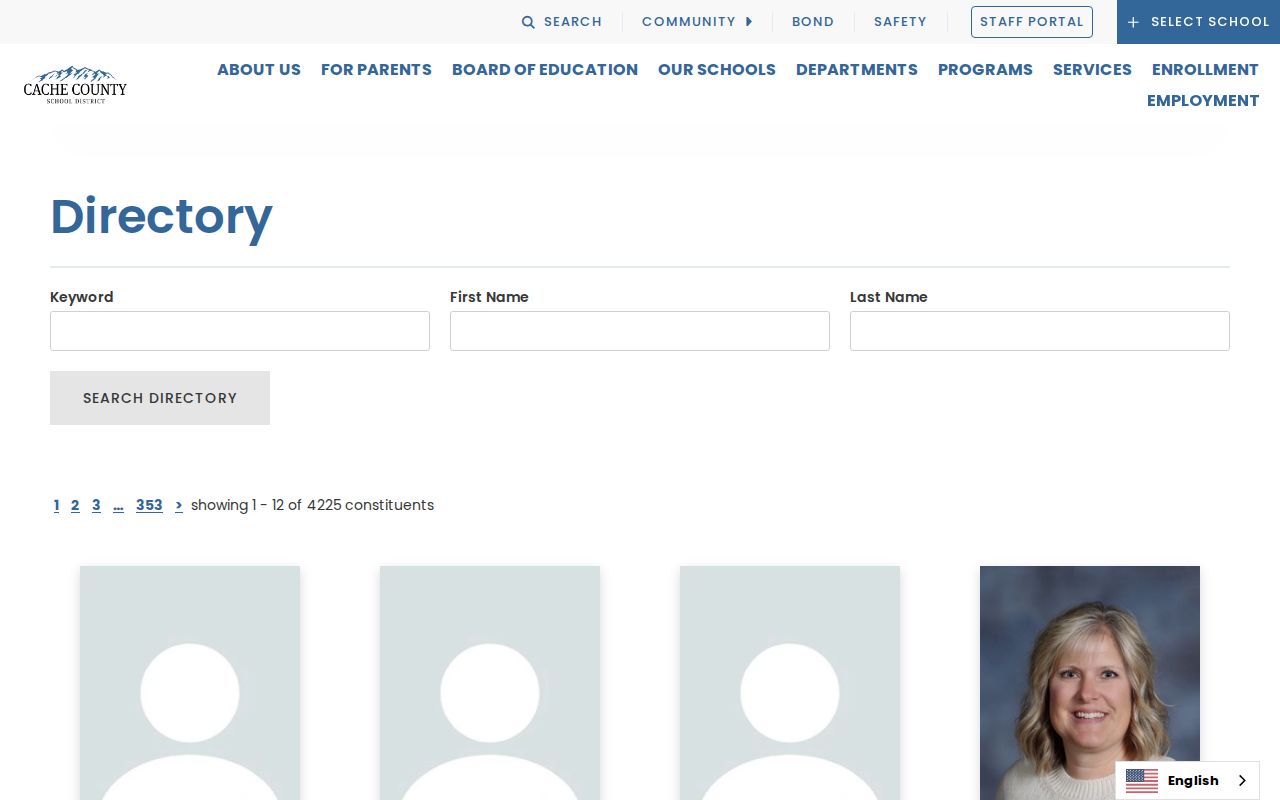
That inventory should not be read as a directory of every educator in Logan. Much of the city is served separately by Logan City School District, whose current directory was not successfully inspected in the research. The Cache listing is still useful for a known district affiliation, but school or department is essential when names repeat.
Reading Logan Directory Entries
An institutional directory entry describes a public role, not a private identity file. USU and school listings vary by unit, but the fields below are the useful core. Absence may reflect a protected field, a recent change, or a person who belongs to another institution.
| Display name | Published full or preferred name |
|---|---|
| Title | Professional or institutional role |
| Department | Organizational unit, school, or campus office |
| Work location | Campus building, room, or public office when shown |
| Work contact | Institutional phone or email when published |
| Profile link | Unit-maintained detail page when available |
Directory limit. Personal home addresses, personal telephone numbers, and protected personnel details are not expected public staff-directory fields. Use listings only for lawful contact and never to harass or harm anyone.
Logan Property-Owner Directories
Cache Online Records Express, known as CORE, works like a property-owner directory. Its public form accepts last name or business name, optional first name, parcel, house number, street, city, tax year, and a legal-description term. The public tier permits 100 parcel searches per day and returns basic tax data. Recorded images and abstracts belong to a paid tier, and the exact first year of the online deed index is not published.
CORE can link a name to an owner mailing address, parcel number, situs address, tax area, and legal description. A situs address is the physical location of the parcel. It is not proof that the owner lives there. The deed index adds grantors, who transfer an interest, and grantees, who receive one. Those roles are tied to a dated instrument rather than current occupancy.
The Cache County Parcel Viewer adds boundaries, subdivisions, zoning, and annexation layers. County GIS says it stores owner mailing addresses but not owner phone numbers. Updates can lag a recorded deed by as much as 30 days, so conflicts should be checked against the Recorder's dated document.
Note: Early ownership chains may require a self-directed Recorder vault search because staff cannot locate nonindexed old documents for a requester.
Logan Professional Business Directories
The Utah DOPL license verification directory searches a profession or license type, license number, first name, last or business name, city, and state. Results may show the licensee, credential type and number, status, expiration, and published detail or discipline links. It verifies a regulated credential on the date shown. It does not prove an unlisted specialty or a current office affiliation.
The Utah Business Search identifies entities by name or number and can return status, type, registration data, registered agent, addresses, and filing links. A registered agent accepts formal notices; that label does not automatically mean owner. Search old names and inactive entities when tracing a Logan firm. Bar, contractor, real-estate, medical, nursing, and educator lookups add role-specific evidence, while Logan or Cache business licenses may require a direct office request if no index is available.
Which Logan Directories Stay Private
There is no official current white-pages database of Logan residents in the research. Neighborhood, congregation, alumni, and civic-club rosters are usually private or member-controlled unless the group chooses to publish a leader or contact page. A chamber member list identifies firms and public business contacts, not every proprietor or worker. Login-controlled alumni tools should remain behind their access rules.
Myth: an official directory is not a master list of local people. City pages list government contacts. The owner roll lists owners, including trusts and firms, but cannot establish who lives on a parcel. School and university directories show institutional ties. Even the public voter list omits protected classes and is obtained under separate state rules rather than used as an open surname browser.
Logan Library Directory Holdings
Logan Library is the public fallback for city directories, telephone books, reverse or criss-cross directories, newspapers, obituaries, family histories, yearbooks, and local histories. Ask reference staff for R. L. Polk or Polk's Logan directories and for the exact print or microfilm span. The official public pages do not publish a complete year-by-year holdings statement, so no volume year should be assumed.
City directory collection
Named residents, addresses, and occupations by publication year.
Years: confirm with catalog or reference staff.
Reverse directory collection
Known street address to listed occupant for a specific edition.
Years: exact Logan run remains unconfirmed.
Phone and newspaper files
Telephone listings, obituaries, notices, and address changes.
Access: catalog, databases, microfilm, or desk inquiry.
Use abbreviated and expanded forms of Logan's numbered grid streets. For example, a directional may appear as a letter, a short word, or a full word. OCR can also break narrow newspaper columns and surnames. Try initials, relatives, an address, and an organization, then inspect the page image instead of treating a blank text search as proof of absence.
Logan Campus Archives Directory
USU Special Collections and Archives expands Logan people directories beyond current staff. University archives, student publications, yearbooks, photographs, oral histories, manuscripts, and Cache Valley collections can tie names to clubs, research, extension work, local firms, and places. Search a surname with initials, department, hometown, and organization because a yearbook name may not match a later form.
Digital collections allow remote discovery, while restricted, unprocessed, or donor-limited material needs staff review. The reading room also supports physical research under its registration and handling rules. Public student newspapers, alumni stories, photographs, and archival publications are better sources than trying to enter a private alumni directory.
Logan Cemetery offers another historical name directory. Burial data can establish a plot and decedent, while burial cards may preserve birthplace and parents. Pair cemetery evidence with an obituary or certificate because administrative or memorial entries do not replace a certified death record.
Historical Logan Directory Timeline
Logan's older directories sit within a long Cache County record trail. Modern databases did not replace the earlier books, reels, and archival series. They created a boundary between searchable current data and records that still require browsing.
- 1857
- Cache County was organized, so some county records predate Logan's founding.
- 1859
- Logan was founded and became the county seat, placing city, county, church, and territorial sources in the same local story.
- 1860 to 1887
- Cache Probate Court civil files cover matters including debt and divorce; later digital access came through an archive partnership.
- 1895 to 1988
- First District Cache civil registers of action span 28 reels and can name parties, attorneys, orders, costs, decrees, and estate papers.
- Modern era
- CORE supplies parcel searching and some digital land detail, but nonindexed early documents still require vault research.
An alphabetical city directory runs from name to address and occupation. A reverse directory runs from address to listed occupant. Neither proves legal ownership, so pair either one with a deed or parcel record when that distinction matters. The general Utah public-records framework and request routes are covered with the Logan public records system.