
Begin a Logan People Search
The best opening depends on what is already known. A full or partial name fits the Cache County owner roll and the Utah court party index. A street address fits the parcel roll and GIS viewer. A former student or faculty name belongs in Utah State University sources, while a death or family connection may lead to Logan Cemetery, newspapers, probate, and historical vital registers. Keep middle names, initials, dates, and old spellings close at hand. Common Cache Valley surnames can otherwise merge unrelated people.
Start with a free official source that matches the known fact, then move outward. Logan is the Cache County seat, so city, county, and state records are all important. The county offices at North Main hold land, tax, marriage, and election material. Utah courts keep a separate courthouse and online system. City departments retain municipal files. The following order keeps the search narrow and makes each result easier to check.
- Search the Cache County parcel roll by owner name or address and save the parcel number.
- Check Utah court parties by name, court location, case type, and date range.
- Use the parcel in GIS, then inspect deeds when ownership history matters.
- For family history, compare cemetery, obituary, probate, and vital-record evidence.
- Ask the actual custodian for an offline record when no public search reaches it.
Note: A name match is a lead, not identity proof; confirm it with a second record that shares a date, role, address, or relative.
Logan Records Offices to Search
Three local custodians cover much of the useful record trail. The Cache County Recorder maintains deeds, liens, plats, and ownership records. The Cache County Clerk handles marriage records, elections, county licenses, minutes, and county GRAMA intake. Logan City routes municipal records through its Recorder and the department that created the file. Court copies do not come from the County Clerk; the First District Court clerk serves that role at the state courthouse.
The detailed rules for copies, fees, and written requests belong with the Logan public records system. Calling first is wise when an early book, archived case, or city department file is not indexed online.
Search Logan Owners in CORE
Cache Online Records Express public search is the strongest free bridge from a Logan name or address to a parcel. The public tier allows up to 100 parcel searches a day and returns basic tax information. A paid subscriber tier offers unlimited searches, recorded images, and abstracts. The two levels are not the same, and the county calls CORE data representational rather than the final official record.
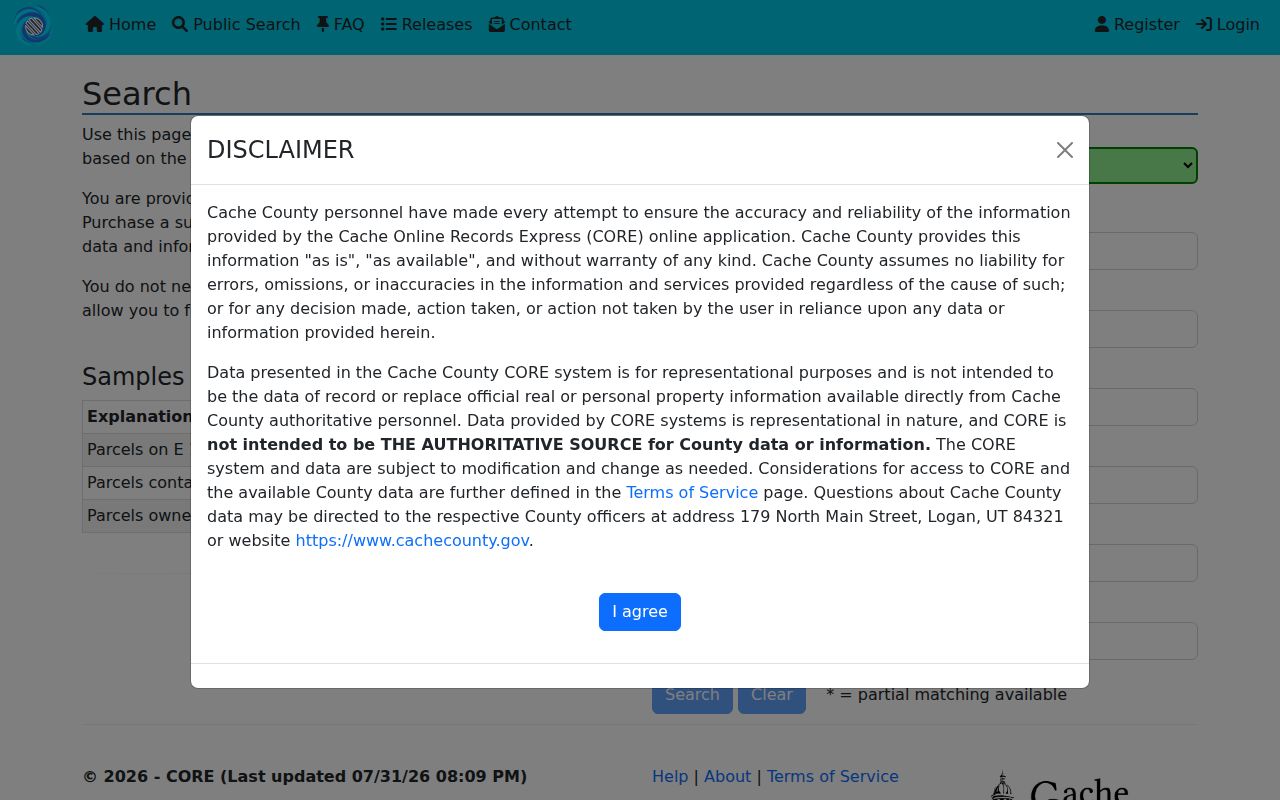
The screen accepts a surname or business name, an optional first name, a parcel number, or split address fields. Combining fields can trim a long result list. The form also accepts a legal-description word, which can help when an address has changed.
| CORE field | Best use | Search note |
|---|---|---|
| Last or business name | Find a listed owner | Partial matching is available |
| First name | Narrow a family name | Optional |
| Parcel | Open one tax account | Format resembles 01-001-0001 |
| House, street, city | Turn an address into an owner lead | Try street variants |
| Legal | Match land text | Useful across address changes |
Read mailing and situs addresses separately. The situs is the parcel location; the mailing address is where tax notices go. Neither proves where the owner lives. Save the parcel number, legal description, and tax year, then confirm a key fact with the Recorder or Assessor.
Follow Logan Parcels Through GIS
The parcel number links the owner roll to Cache County mapping. The Parcel and Zoning Viewer displays parcels, subdivisions, county and city zoning, annexations, and sensitive-area layers. Data updates monthly, while owner or boundary changes after a deed may lag by as much as 30 days. Recorder plats follow another update process. When screens conflict, use the recorded instrument and ask the responsible office.
A postal address that says Logan may sit in North Logan, River Heights, Providence, Hyde Park, or an unincorporated area. That detail decides whether Logan City or Cache County keeps a permit or zoning file. The GIS annexation and jurisdiction layers help choose the correct custodian before a request is sent.
Key point: Cache GIS keeps owner mailing addresses but not owner phone numbers. Use public contact sources and never treat a parcel address as proof of occupancy.
Trace Logan Names in Court Records
Logan court research is split among MyCase, Xchange, and the clerk. MyCase is a free identity-verified account for a person’s own eligible cases. Utah Courts Xchange is the paid public index for permitted district and justice court information. The courthouse provides copies, certified records, audio, and older files that need staff handling.
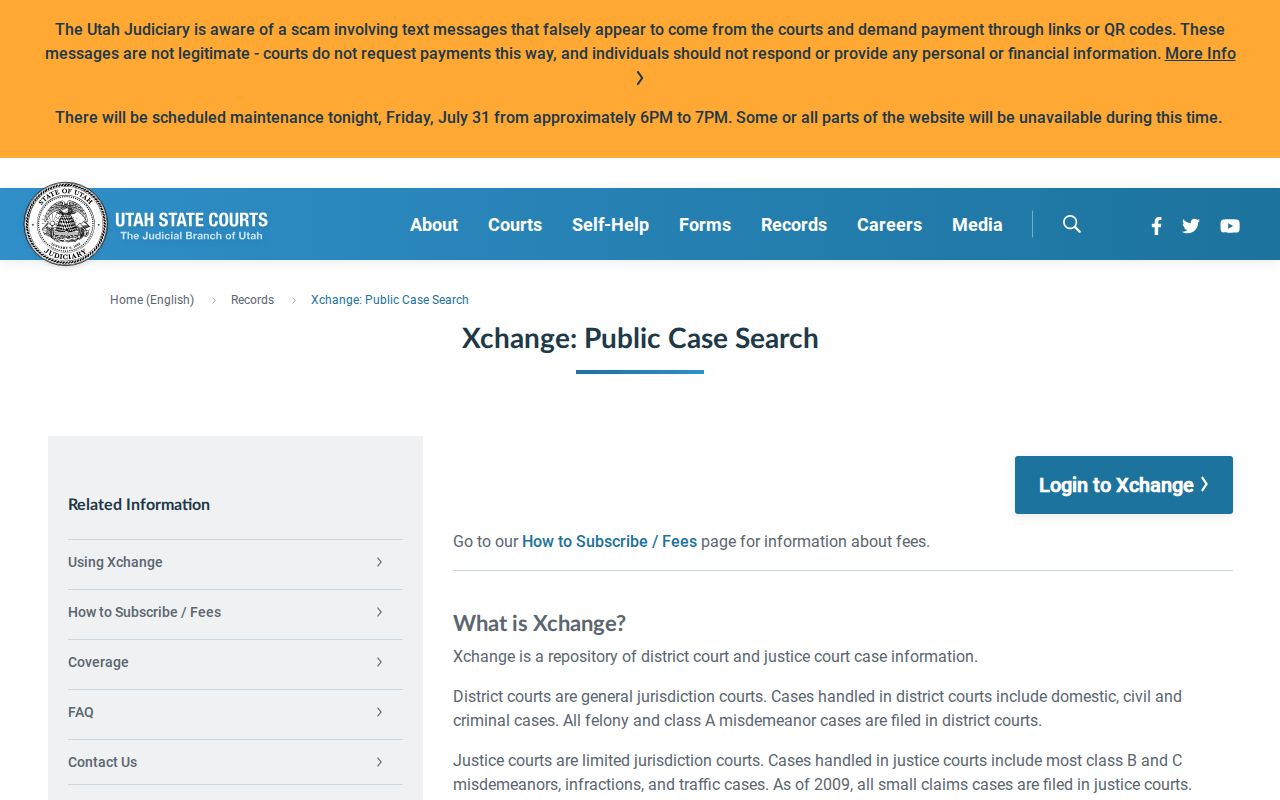
Xchange can narrow a party name by statewide, county, or court scope, case type, year, case number, and date range. Logan district data is complete for filings from August 18, 1997; older cases may appear but can be incomplete. Public district document images filed from July 1, 2010 may be purchased. A missing result can also reflect a spelling variant, an archived file, or a sealed, expunged, juvenile, or otherwise protected matter.
| Logan court source | What it covers | Access route |
|---|---|---|
| First District Court | Civil, criminal, domestic, probate | Xchange, MyCase, clerk, public terminal |
| Logan Justice Court | City misdemeanors, traffic, small claims | Xchange and court clerk |
| District of Utah | Federal cases | PACER and federal clerk |
A docket is the court’s event list, not a finding that every allegation is true. Pair names with court location and case number, then obtain the public case file or certified copy when the result will matter.
Bridge Logan's Analog Record Gap
Cache County’s land trail began with territorial-era manuscript books. An 1850 ordinance required county recorders to preserve conveyances in bound, alphabetized volumes open for examination. Early deeds may be called transfers, and some books mix survey certificates with transfers. Modern CORE makes current parcel searching fast, but the Recorder says staff cannot locate old documents that lack a digital index.
That limit does not mean the paper record vanished. Start with the latest known parcel and deed, note the legal description and grantor, then work backward through the vault indexes. Older court, probate, naturalization, and vital series may have moved to Utah Archives. The newly published First District Cache index and register images are browsable, not searchable by name. Alphabetical index pages lead to a case or estate number, which then opens the register or file.
- Grantor
- The party transferring an interest in recorded land.
- Grantee
- The party receiving that recorded interest.
- Index
- A finding aid that points to a document; it is not the full document.
- Docket
- The dated list of events and filings in a court case.
Locate Logan Vital Records
Bear River Health Department and the Utah Office of Vital Records and Statistics issue eligible birth and death certificates for Logan events. Cache County Clerk handles marriage licenses and copies. Divorce decrees remain court records at the First District Court, while the state offers certain marriage and divorce abstract products for events from 1978 through 2010.
Recent certificates are restricted. Under Utah Code section 26B-8-125, birth records open after 100 years, death records after 50 years, and other vital records after 75 years. Before those periods, an applicant needs a direct, tangible, and legitimate interest, identification, and any proof of relationship. Historical users can move to Utah Archives, cemetery records, newspaper obituaries, and family-history catalogs once the statutory period has passed.
Cache County’s digitized birth registers for 1898 through 1905 offer a concrete historic route. Marriage applications can be rich in parents’ names and birthplaces, but fields collected during a current transaction are not automatically public. Ask for the issued record and follow the Clerk’s access rules.
Find Logan Heirs and Family
Estate research works best when legal and narrative records are paired. Search the First District probate index for the decedent, venue, and approximate year. A public petition, order, or inventory may name heirs or fiduciaries. An obituary can supply married names, former towns, and surviving relatives, but it is publisher-created evidence. Birth, marriage, cemetery, and census records can check the relationship.
For an old address, trace the current parcel and its deed chain first. Then compare reverse city directories, census schedules, newspapers, and probate. A reverse directory links an address to a listed occupant; a deed links land to an owner. Those roles can differ, especially in Logan’s large student and renter population. Keep a short source log so the same name is not joined to two different families.
Use Logan Library Search Trails
Logan Library is the practical fallback when web portals end. Its catalog, databases, newspapers, local histories, and reference staff can connect a surname to an old address or community event. Ask specifically about Polk or R. L. Polk city directories, reverse or criss-cross volumes, telephone books, Logan newspaper microfilm, obituary indexes, family histories, and yearbooks. Exact directory years are not published as a complete official list, so confirm a needed volume with the reference desk.
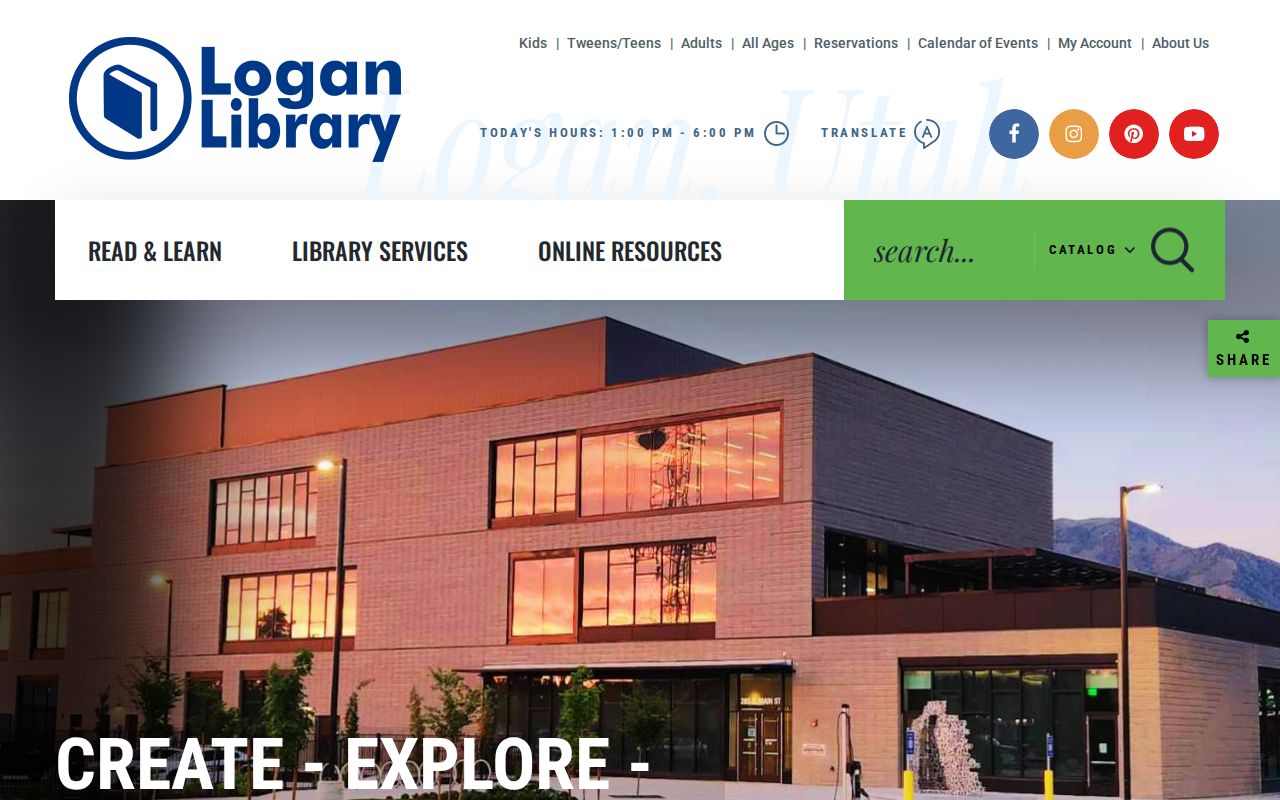
The library portal is the entry point, not proof that every local item is digitized. Search newspaper OCR with initials, relatives, an address, and an organization name. Narrow columns and worn type can break a surname. If a text search fails, browse the date range and inspect page images.
Note: Ask staff to confirm an exact city-directory year before planning a visit; the research found no complete online holdings run.
Reconnect Through Logan Campus Records
Utah State University gives Logan a second, distinct people trail. Current institutional listings may connect a name with a role or department. Yearbooks, student newspapers, photographs, oral histories, manuscripts, and organization records can identify former students, faculty, extension workers, clubs, and Cache Valley businesses. Search by surname plus initials, department, hometown, and group name.
Merrill-Cazier Special Collections uses Archives West for collection descriptions, a separate catalog for physical items, and Digital History Collections for scans. Its photograph holdings are described as about 700 collections and 250,000 images, with about 30,000 digitized. Reading-room material is closed-stack, so visitors register, show identification, and request items. A catalog record can still establish a creator, correspondent, or organization even when the item image is not online.
Verify Logan Business Name Leads
A company name can lead to a person through two different state systems. The Utah Business Search returns entity status, type, registration data, and filed roles such as registered agent. It does not prove that an agent owns the firm or lives at the filing address.
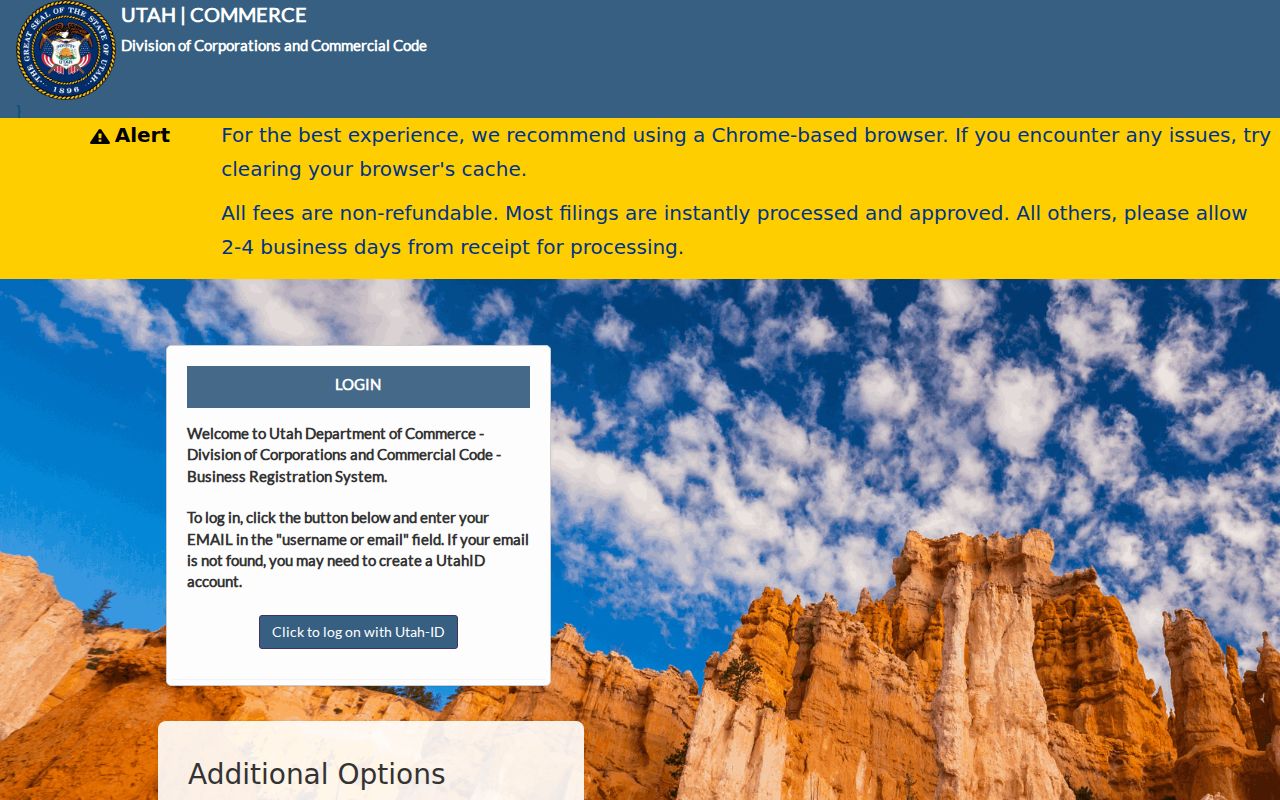
The business interface helps distinguish active and inactive filings and gives a route to official copies when needed. Search old names and spelling variants because a firm may amend its name or lapse.
The Utah professional license lookup instead ties an individual or business to a regulated credential, status, number, and expiration information. Search fields include profession or license type, license number, first and last or business name, city, and state.
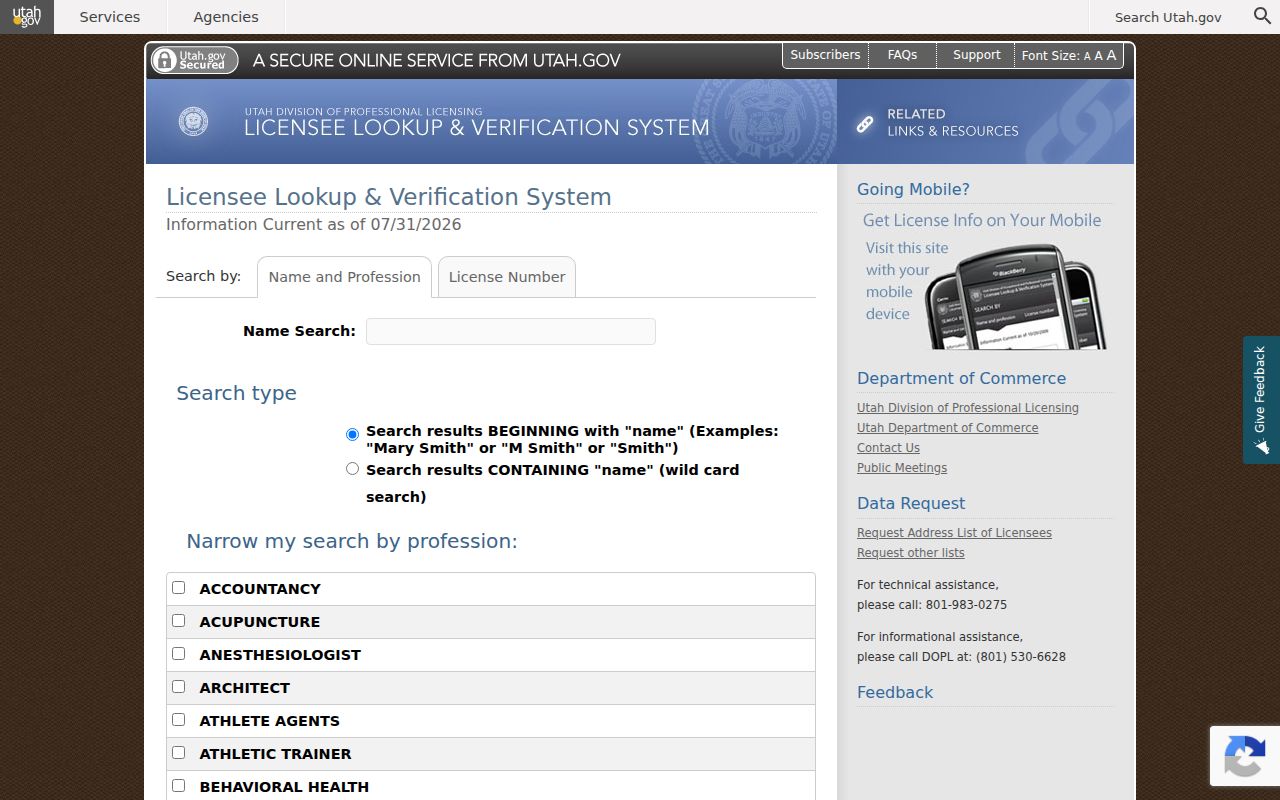
A license confirms the role and status shown on the dated record. Office affiliation and discipline may appear in separate parts of the system, so do not infer more than the entry states.
Check Logan Voter Status Safely
Utah’s voter tools serve different users. The official self-lookup asks a voter for first name, last name, and date of birth to show that person’s status and polling details. It is not a public surname browser. Public voter-list fields are available only through the state or county product process, and protected identity fields remain confidential.
The full record set, privacy categories, county-list route, and list-maintenance rules are covered with the Logan voter registration lookup. Never publish the location of someone protected through Utah’s at-risk voter rules or Address Confidentiality Program.
Request Missing Logan Records
Utah’s Government Records Access and Management Act, known as GRAMA, is the fallback for an existing government record that is not posted. Send the request to the entity that retains the file. Include a name and mailing address, an email address if willing, a daytime phone number, and a reasonably specific description. A record type, date range, name, parcel, case, incident, or document number is far more useful than asking for everything about a person.
Ordinary responses are due within 10 business days under Utah Code section 63G-2-204, subject to statutory extraordinary circumstances. A demonstrated public-benefit expedited request has a five-business-day deadline. Submission is free, though the agency may charge reasonable actual costs under section 63G-2-203 after the first 15 minutes of staff time. GRAMA cannot open a sealed case, a recent vital certificate, or another record made confidential by law.
Cache County Clerk’s records page shows the county intake route and the offices it serves.
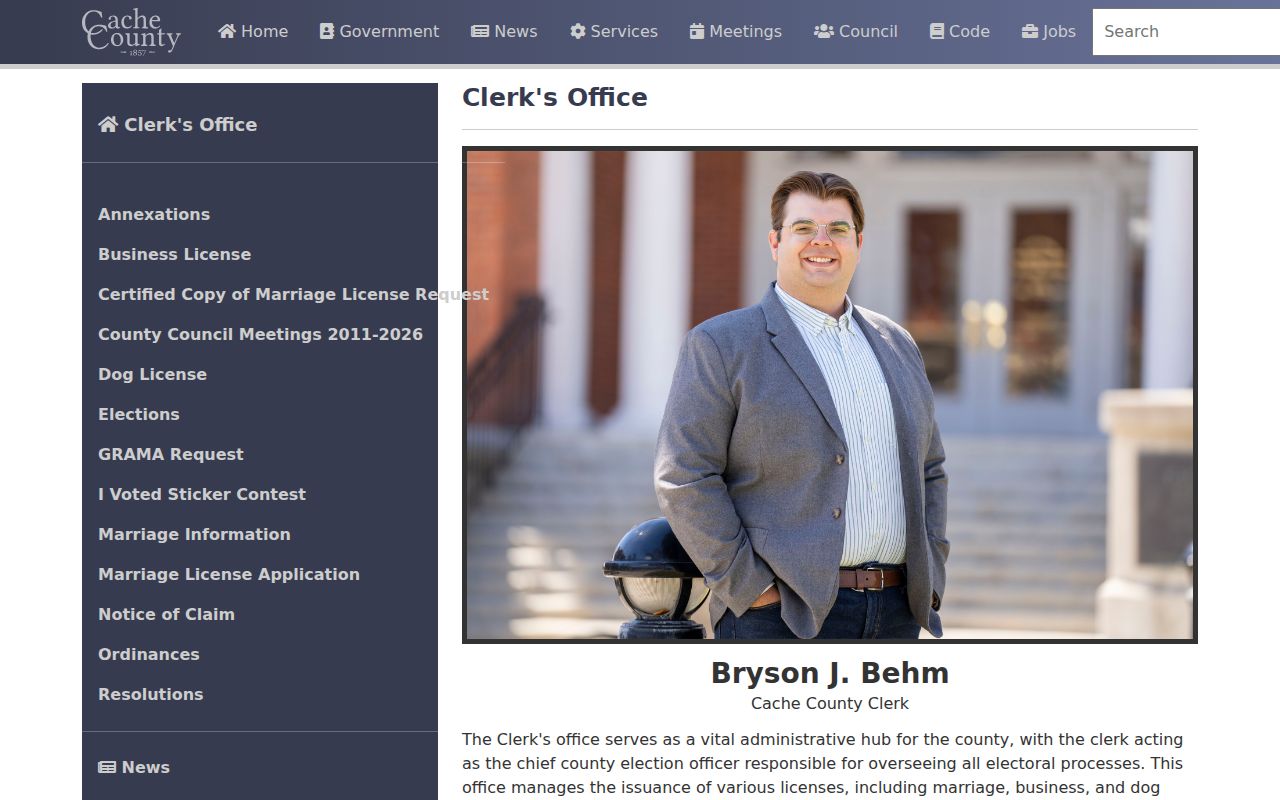
The Clerk screen confirms that county requests belong with the county, while sheriff reports follow the Sheriff Records Officer’s separate channel. City records should name the Logan department that created them. A request can seek electronic copies, a cost estimate, and a lawful fee waiver when the statutory grounds apply.
Compare Logan Search Sources
Official records answer defined questions. Commercial people-finder databases combine government and private data, may charge recurring fees, and can lag or merge identities. They can provide a lead, but the custodian’s record is the source to check before relying on it. Free and paid access also differ within official systems, as CORE and Xchange demonstrate.
| Source type | Strength | Limit | Best next step |
|---|---|---|---|
| Official index | Defined keeper and fields | May omit images or protected files | Request the source document |
| Library or archive | Older local context | Some items require a visit | Ask staff about the exact series |
| Commercial compilation | Broad lead gathering | May be stale or merge people | Verify through an official record |
Use records lawfully. Public access never permits stalking, threats, harassment, or harm. Respect confidential fields and protected-address programs.